
.webp)
1.0 GET STARTED
1.1 About This Peptide
Tirzepatide is a synthetic peptide studied for its dual action on GLP-1 (glucagon-like peptide-1) and GIP (glucose-dependent insulinotropic polypeptide) receptors. This dual incretin activity is associated with pathways involved in appetite regulation, glucose metabolism, and energy balance.
In research and clinical discussions, Tirzepatide is often referenced for its role in metabolic optimization and weight-related pathways. Its mechanism is distinct due to its combined receptor activity, which may influence both insulin response and satiety signaling.
Potential Benefits (Researched For)
Research suggests Tirzepatide may influence several biological pathways related to metabolism and appetite regulation. While most data comes from clinical and laboratory research, commonly discussed potential benefits include:
-
May support appetite regulation and satiety signaling
-
May assist glucose metabolism and insulin response
-
May contribute to weight management pathways
-
May support metabolic efficiency
-
May influence energy balance and nutrient utilization
-
Human research is ongoing, and individual outcomes may vary.
Possible Minimal Side Effects (Reported)
In available research and anecdotal reporting, Tirzepatide is generally described as well tolerated. When side effects are reported, they are typically mild and may be dose-dependent.
-
Mild nausea
-
Temporary appetite suppression
-
Digestive discomfort (occasionally reported)
-
Fatigue (in some cases)
Individual sensitivity and response may vary.
“Read more about how to reduce possible minimal side effects in our FAQ.”
1.2 Supplies Checklist
Before beginning, it is important to have the appropriate sterile supplies prepared. Using proper equipment supports accurate measurement, sterile handling, and safe administration.
Most users prepare the following:
-
1 mL insulin syringes (29–31 gauge)
-
Bacteriostatic water
-
Alcohol prep pads
-
Sterile 1 mL or 3 mL syringe (often used for mixing/transferring)
-
Sharps container for proper disposal
Maintaining sterile technique helps reduce contamination risk.
1.3 How To Mix
What Is Reconstitution?
Reconstitution is the process of adding bacteriostatic water to the freeze-dried (lyophilized) peptide powder in order to prepare it for injection. Tirzepatide is typically supplied in powder form to preserve stability during shipping and storage.
Proper mixing ensures consistent concentration throughout the solution and helps maintain peptide integrity.
How To Mix
-
Clean the tops of both vials with an alcohol pad.
-
Draw the desired amount of bacteriostatic water into a sterile syringe.
-
Slowly inject the water down the inside wall of the Tirzepatide vial.
-
Allow the powder to dissolve. GENTLY SWIRL. DO NOT SHAKE.
Common Vial Sizes
Tirzepatide is commonly sold in:
-
5 mg vial
-
10 mg vial
Dilution volume may vary depending on personal preference and desired concentration.
1.4 Injection Basics
Tirzepatide is most commonly administered subcutaneously (under the skin). Subcutaneous injections use small insulin syringes and are generally simple to perform with proper technique.
Understanding basic injection principles can improve comfort, consistency, and overall user confidence.
Subcutaneous Injection Quick Guide
Topic | Quick Guide |
|---|---|
Disposal | Use a sharps container. If unavailable, place needles in a sealed, puncture-resistant container, never loose in regular trash. |
Site Rotation | Rotate injection areas daily |
Injection Angle | 45–90 degrees |
Needle Size | 29–31 gauge insulin syringe |
Common Areas | Lower abdomen, outer thigh, upper arm |
Injection Type | Subcutaneous (under the skin) |
2.0 DOSING & STORAGE
2.1 Dosing Protocol (Commonly Reported)
Dosing approaches for Tirzepatide vary depending on individual goals, tolerance, and context of use. The example below reflects commonly reported ranges discussed in research and performance communities.
2.2 Storage Basics
Proper storage helps preserve peptide stability, potency, and shelf life. Environmental exposure can impact peptide integrity, especially after reconstitution.
Before Mixing (Powder Form)
Tirzepatide is relatively stable when stored correctly.
-
Store in a cool, dry place
-
Protect from direct sunlight
-
Avoid excessive heat exposure
After Mixing
Once reconstituted, refrigeration is recommended to maintain stability.
-
Refrigerate at 2–8°C (36–46°F)
-
Do not freeze
-
Avoid shaking
-
Keep vial upright when possible
Stability duration may vary depending on storage conditions and handling.
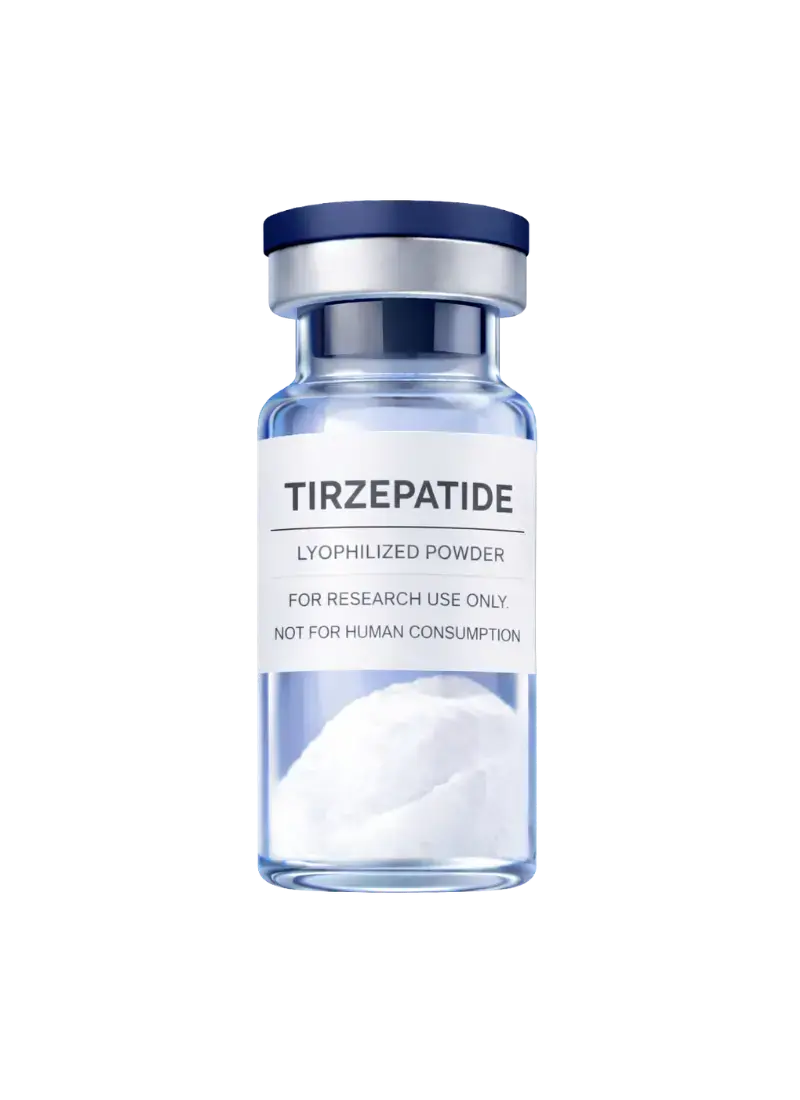
.webp)

Tirzepatide Metabolic & GLP-1/GIP Peptide Guide
A simplified overview of Tirzepatide, focused on GLP-1 and GIP receptor activity, metabolic function, preparation basics, and commonly discussed research applications.
KEY BENEFITS
-
May support appetite regulation and satiety signaling
-
Commonly discussed for metabolic and weight management support
-
May assist glucose regulation and insulin sensitivity
Learn Peptides & What They Can Do For You.